èqui
A service design project connecting people with a migratory background to local organisations and volunteers in Milan, helping them navigate and access the support they need.
2022
<contribution>
Service design, communication design, ux/ui
<tools>
Figma
> context
èqui is a network of organisations and volunteers aiming to provide support to people with a migratory background in accessing and navigating the services available in Municipio 2 in Milan. Our service aims to overcome language barriers and cultural differences, helping people better access and interact with local resources, and creating a more inclusive and equitable community.
èqui is a student project made by a team of 6 at Politecnico di Milano. I was mainly involved in the research, communication, and web design process.
> problem
People with a migratory background often face challenges when they move to a new country. Despite these challenges, they can bring valuable skills and experiences to their new communities – yet cultural differences and language barriers frequently prevent them from fully participating in society and accessing the support they need.
Cultural differences and language barriers make it difficult to fully participate in society
> research
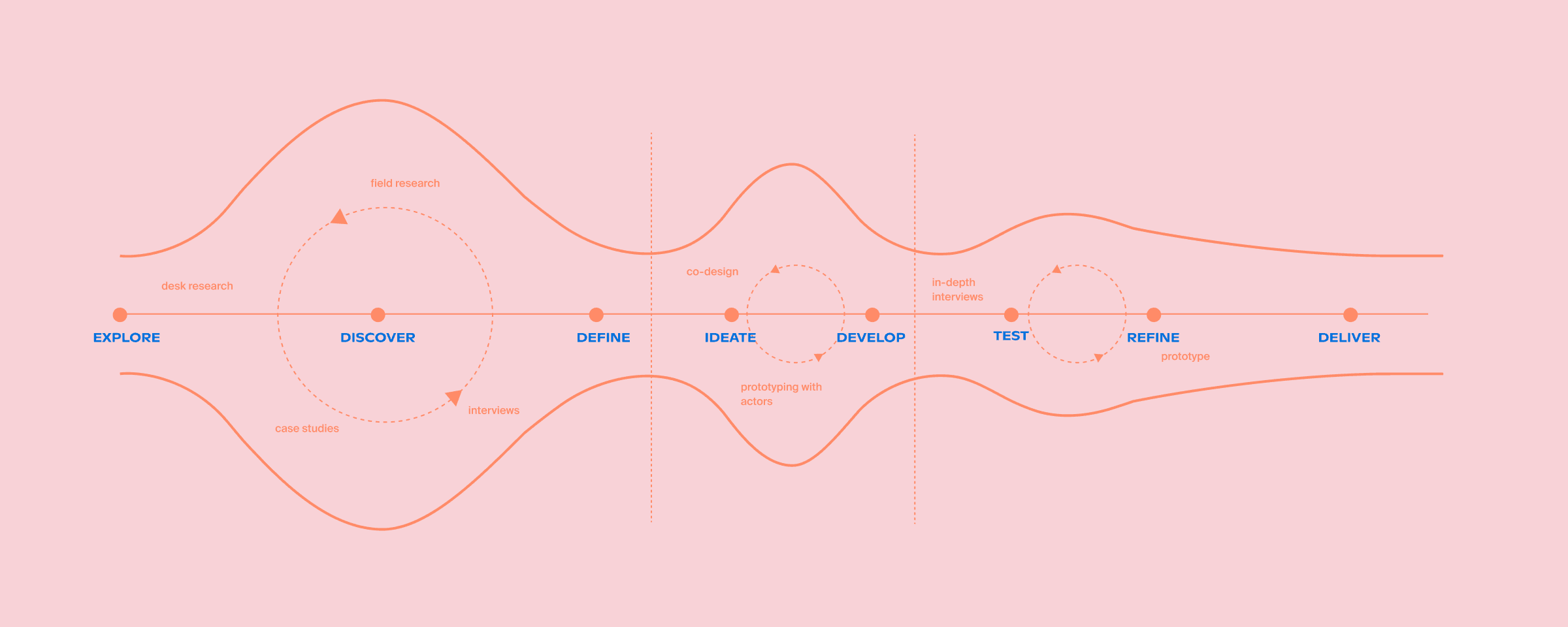
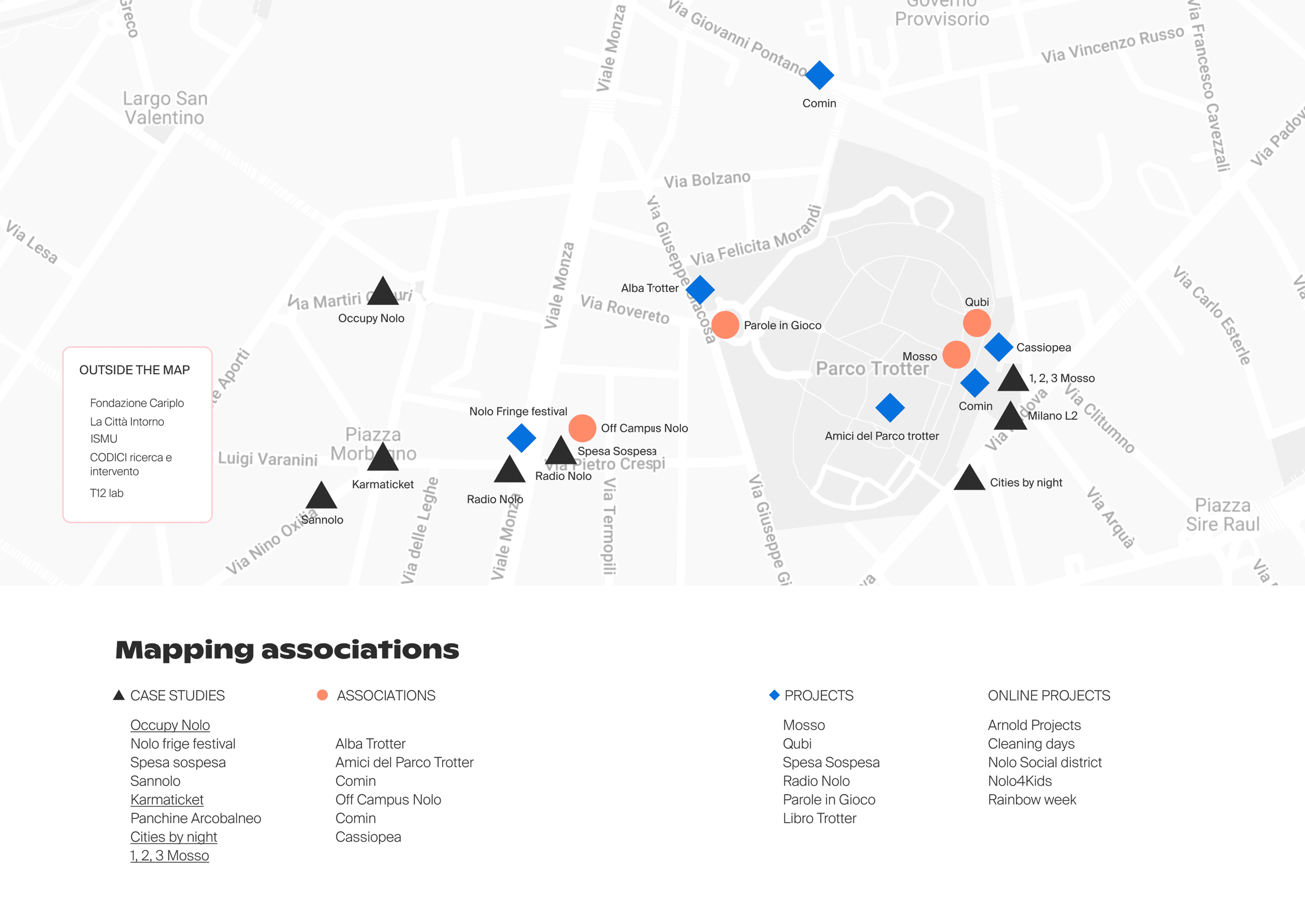
The scope of our research was defined by two main streets in Municipio 2: Via Padova and Viale Monza. These streets represent a melting pot in the city of Milan, with similar yet very distinguished realities.
Throughout our field research, we interviewed local people and experts from associations. Conducting interviews with these individuals allowed us to gain valuable insights into how organizations train and manage volunteers, as well as the specific needs and challenges people face.
> co-design
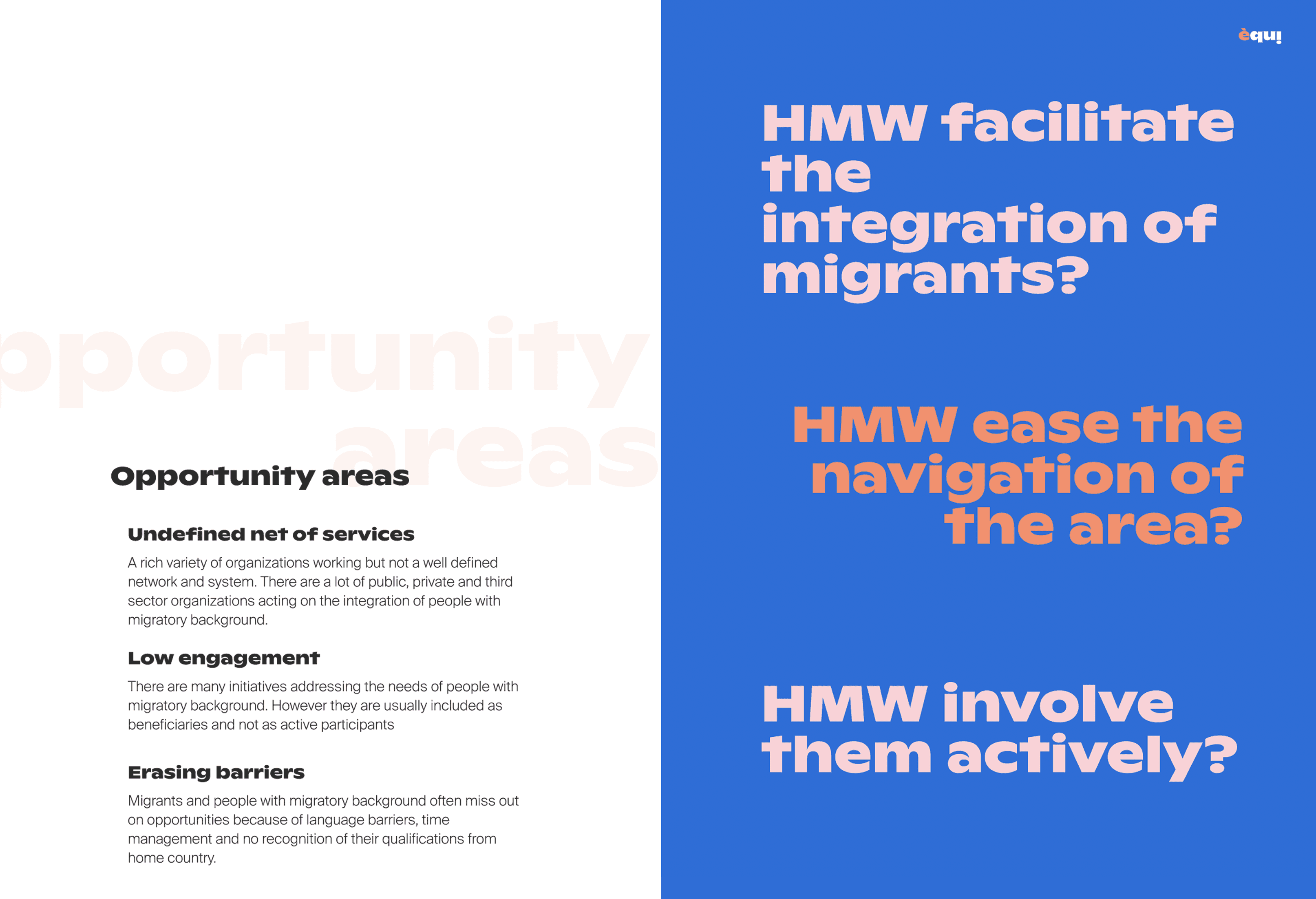
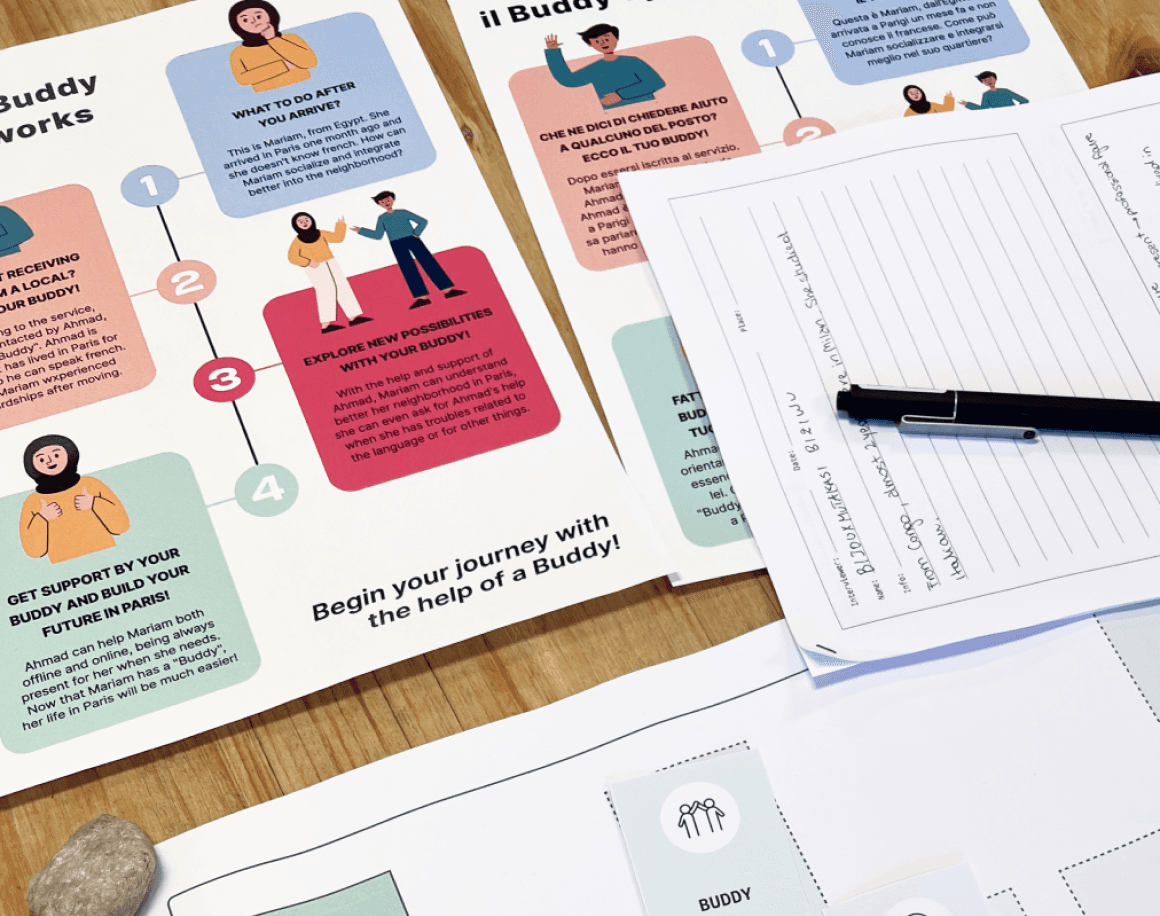
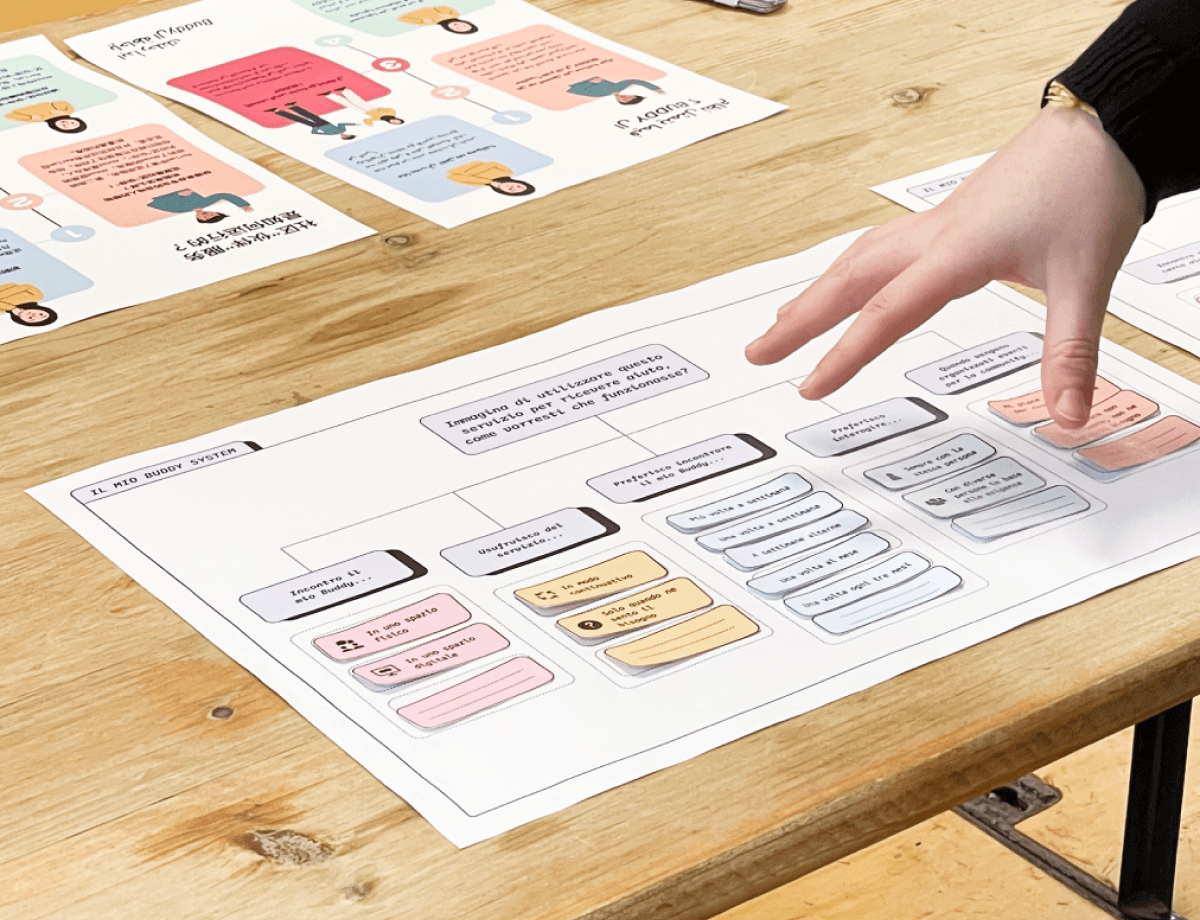
We designed the co-design session to verify our primary hypothesis that people with a migratory background are missing a bridge between themselves and the broader society around them.
We worked directly with our target groups to uncover their main difficulties – the kinds of needs that don't always surface in formal interviews. What emerged shaped the foundations of our service concept and confirmed that the gap we had identified was real and widely felt.
> concept
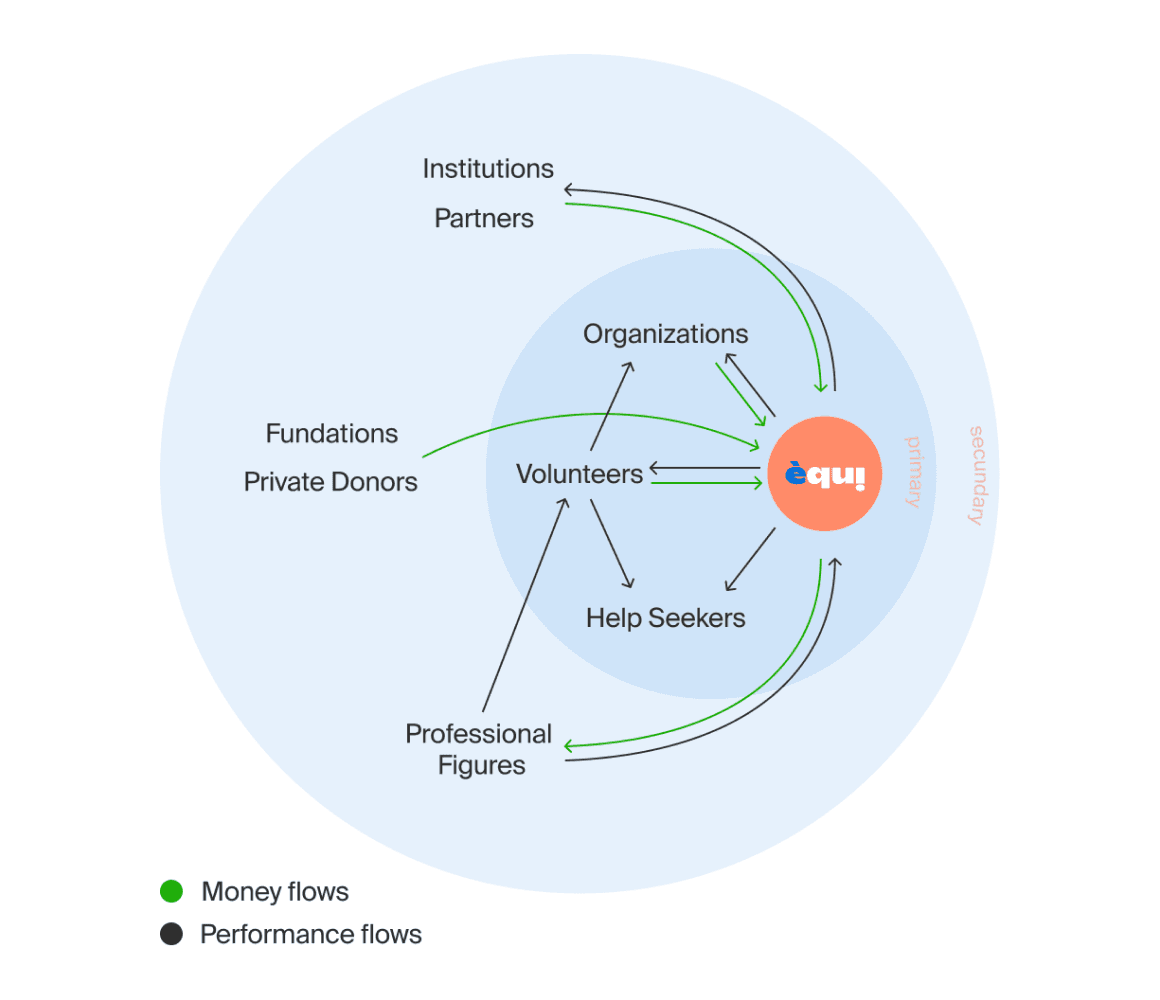
èqui provides people with a migratory background and the associations that work for/with them with a unified network of all services available in the local area.
Through the interaction between trained volunteers and people seeking help, it also makes it possible to monitor the most frequent needs and requests, so that gaps can be identified and addressed by local associations and organisations.
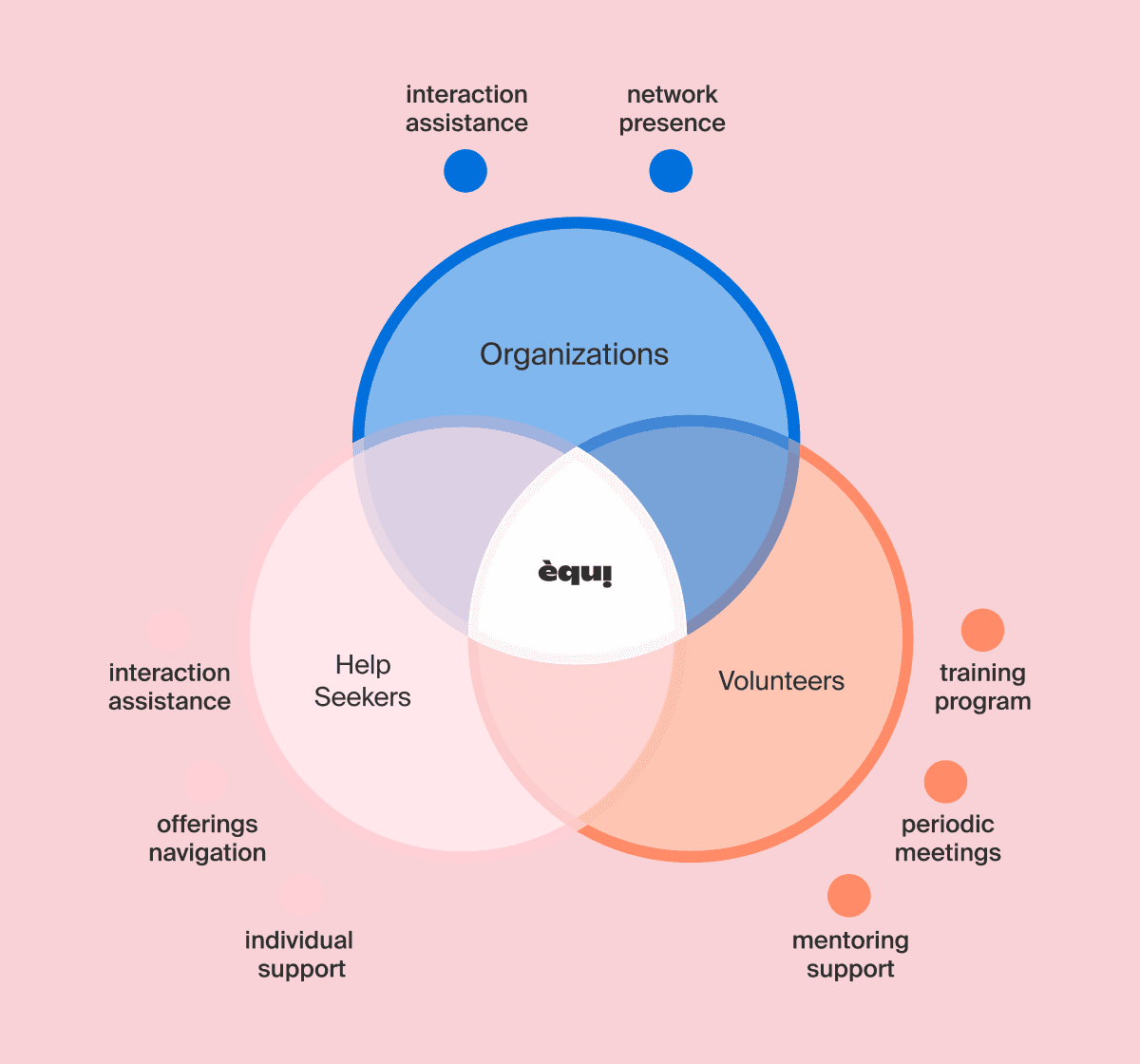
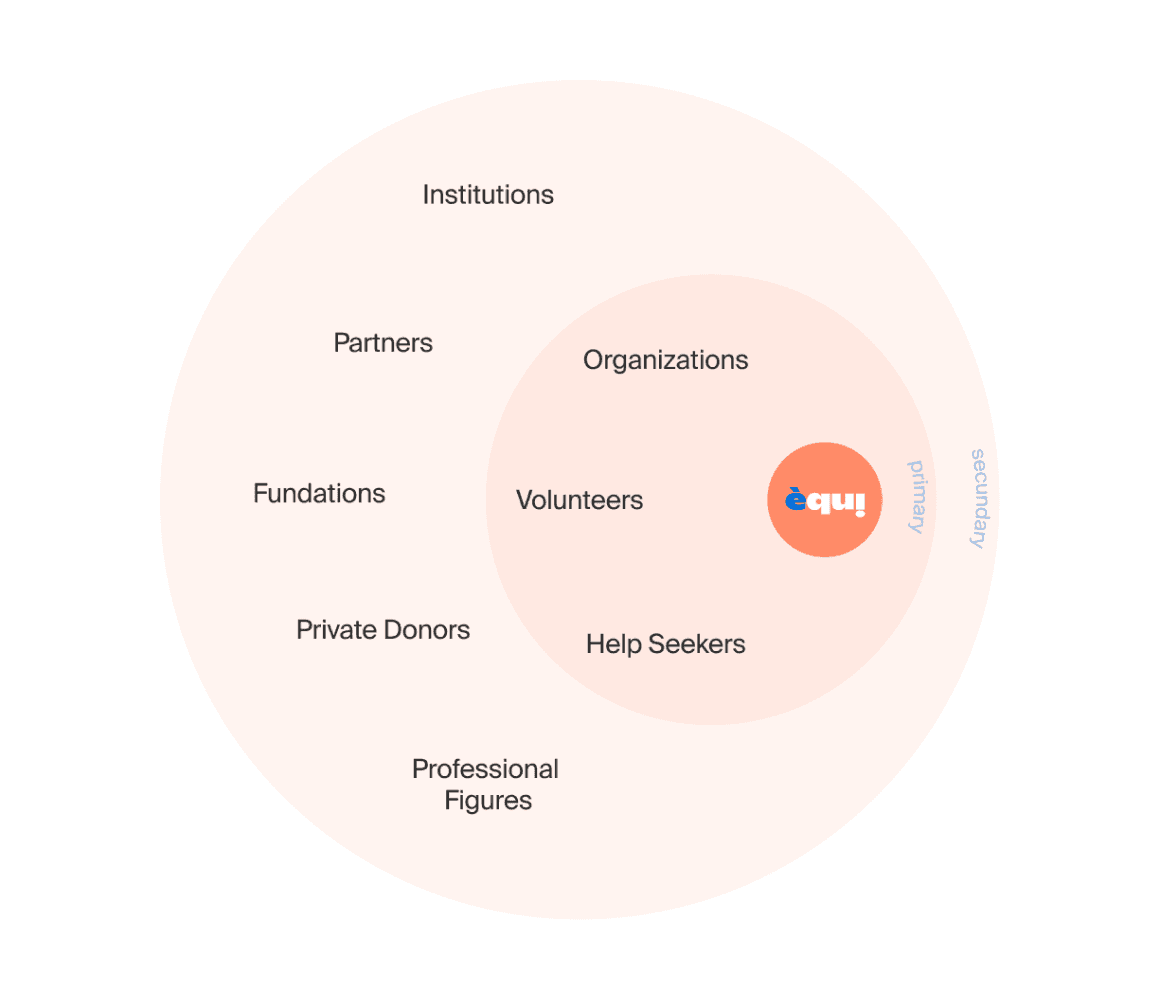
Three groups are at the heart of the service: people seeking support, trained volunteers, and local organisations. èqui connects all three.
> identity & web design
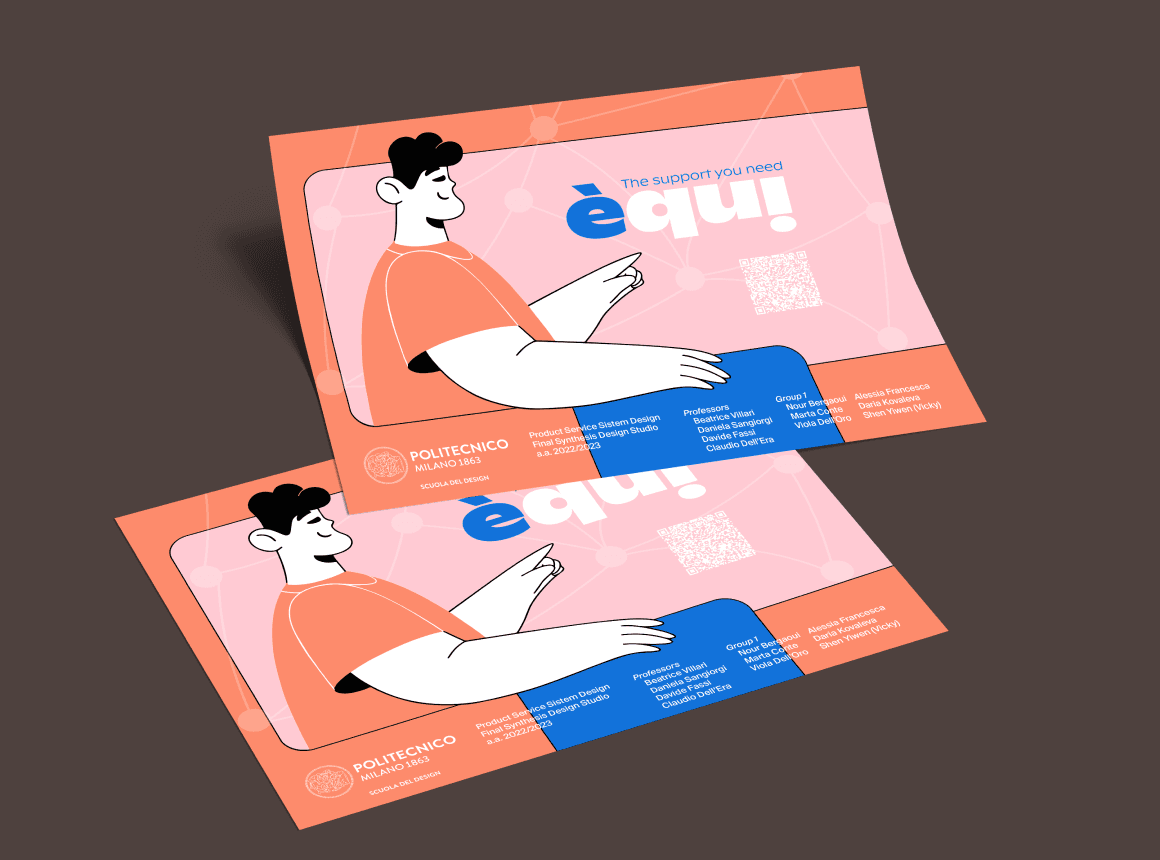
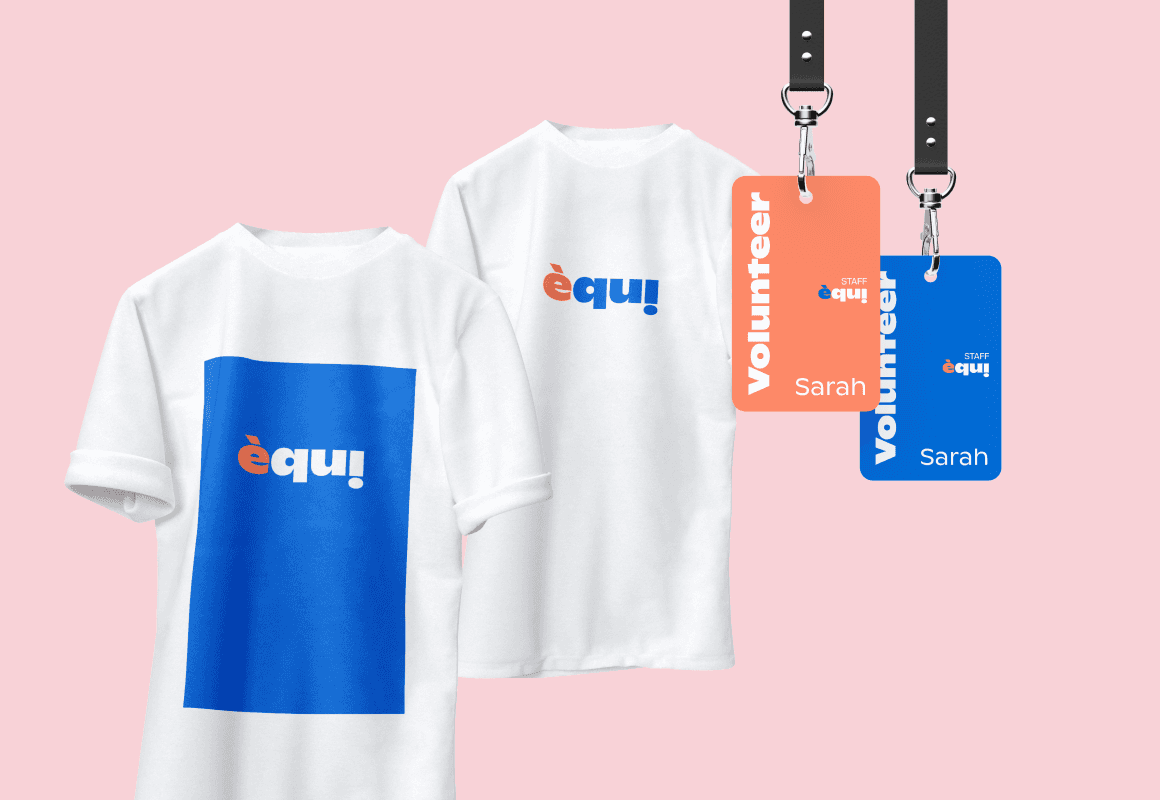
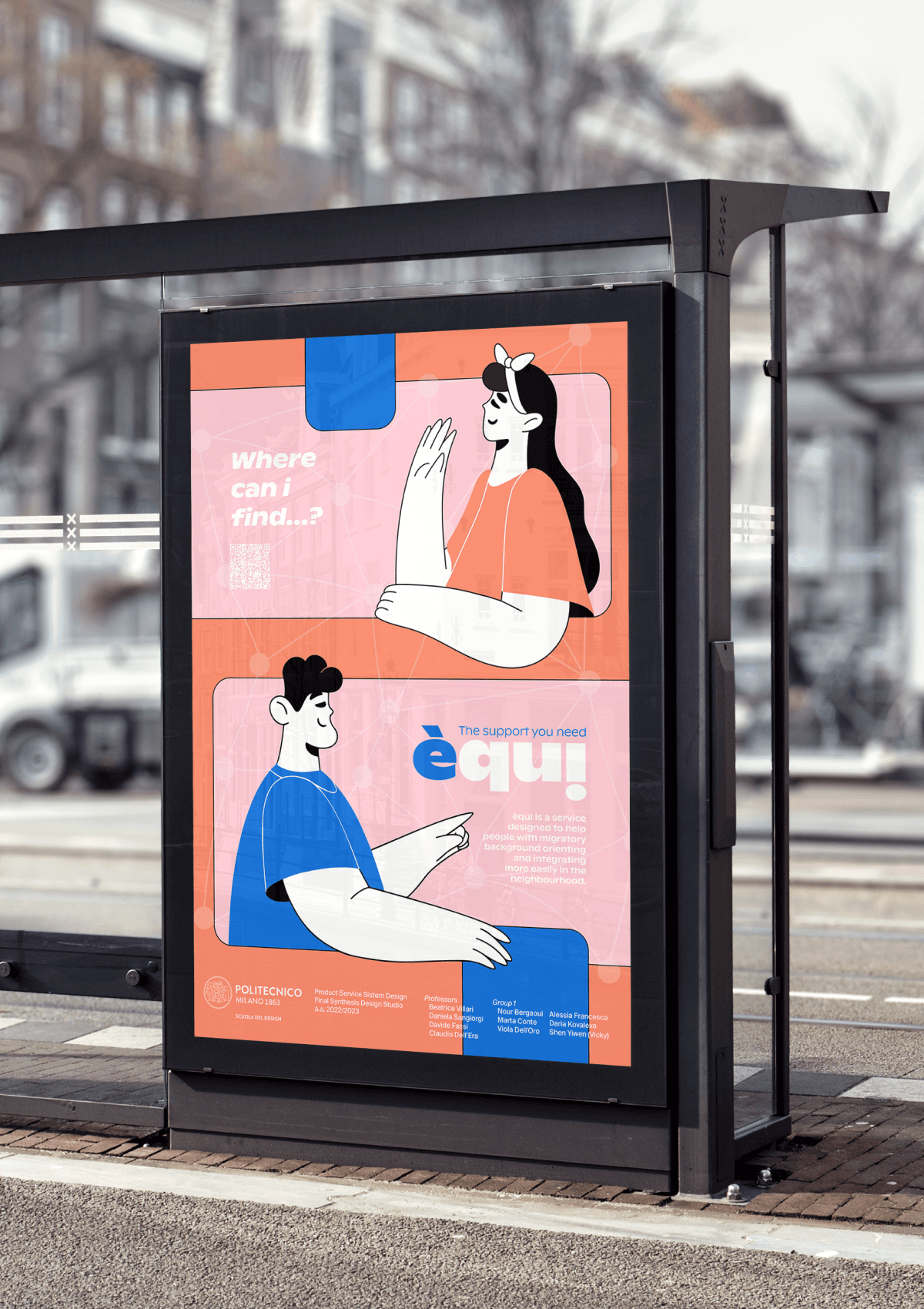
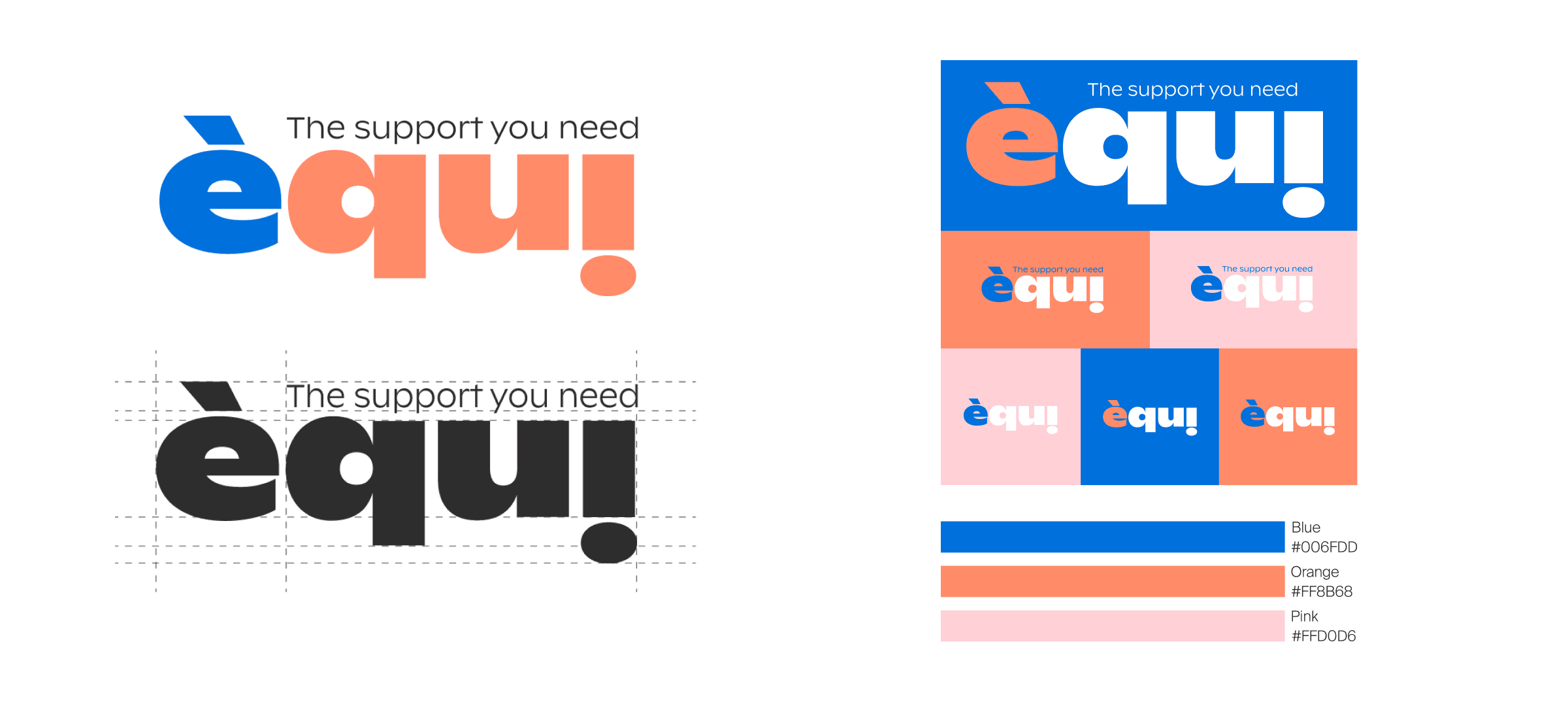
Our brand identity is based on two fonts: Ginto Nord and Suisse Intl. The colour blue is a symbol of reliability, productivity, stability, while orange is generally considered a colour that expresses enthusiasm, harmony, and peace of the senses, all characteristics we want to convey to people through our service. Finally, the pale pink is used as an accent colour, mainly for details.
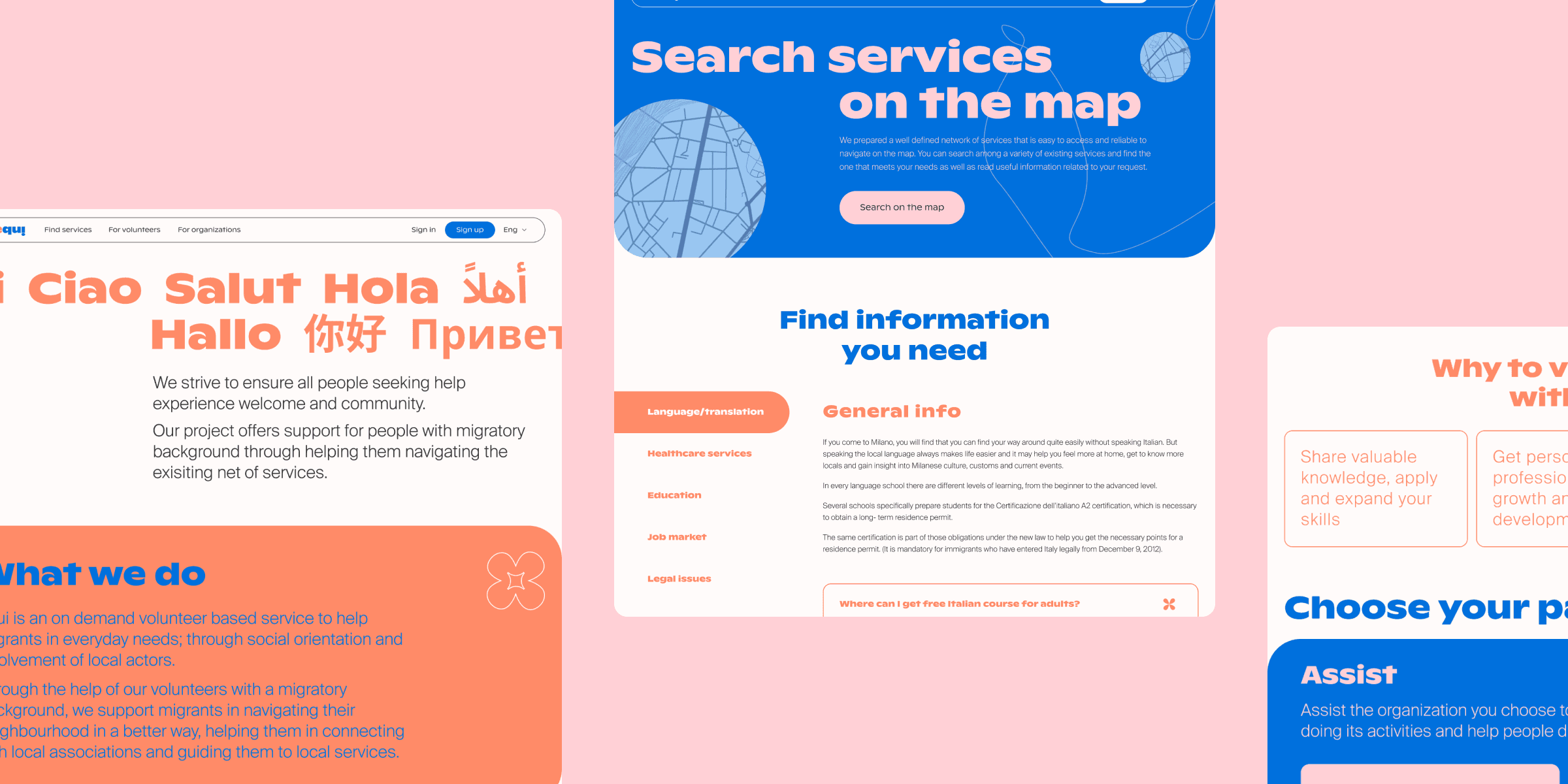
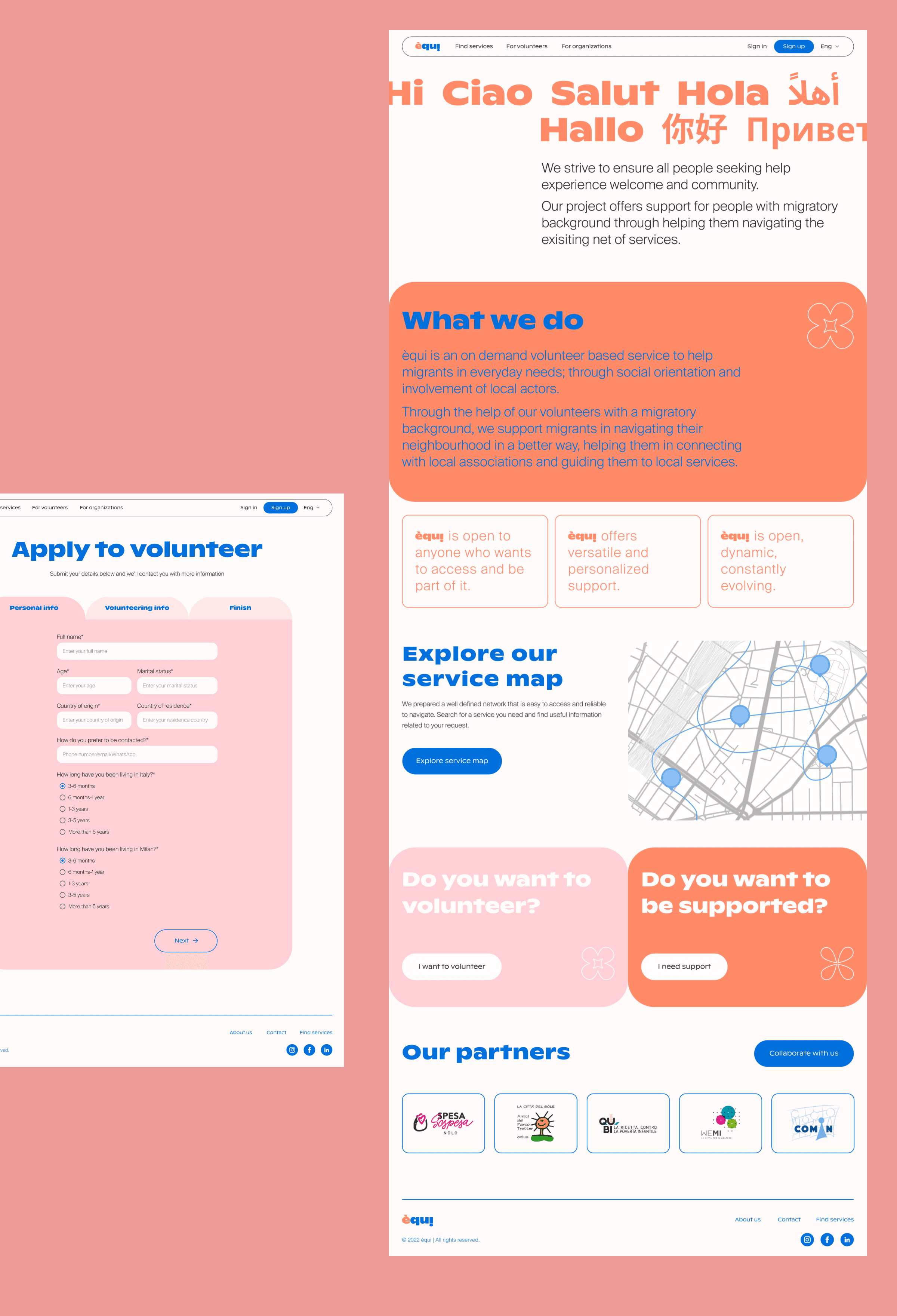
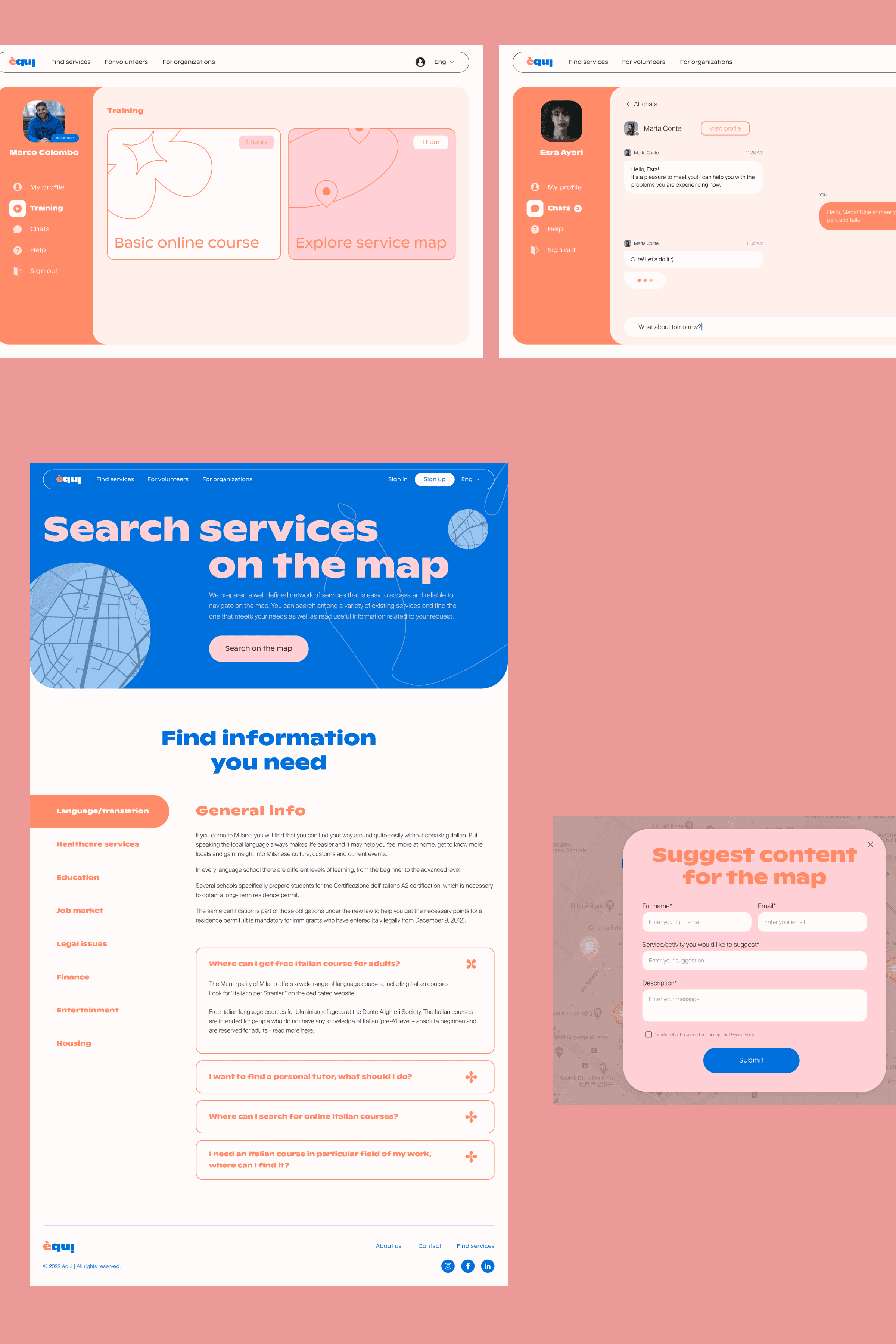
The website is structured around one core action: finding help. Users can quickly access an interactive map of local services filtered by need, and can also suggest new services to add – keeping the platform living and community-driven.
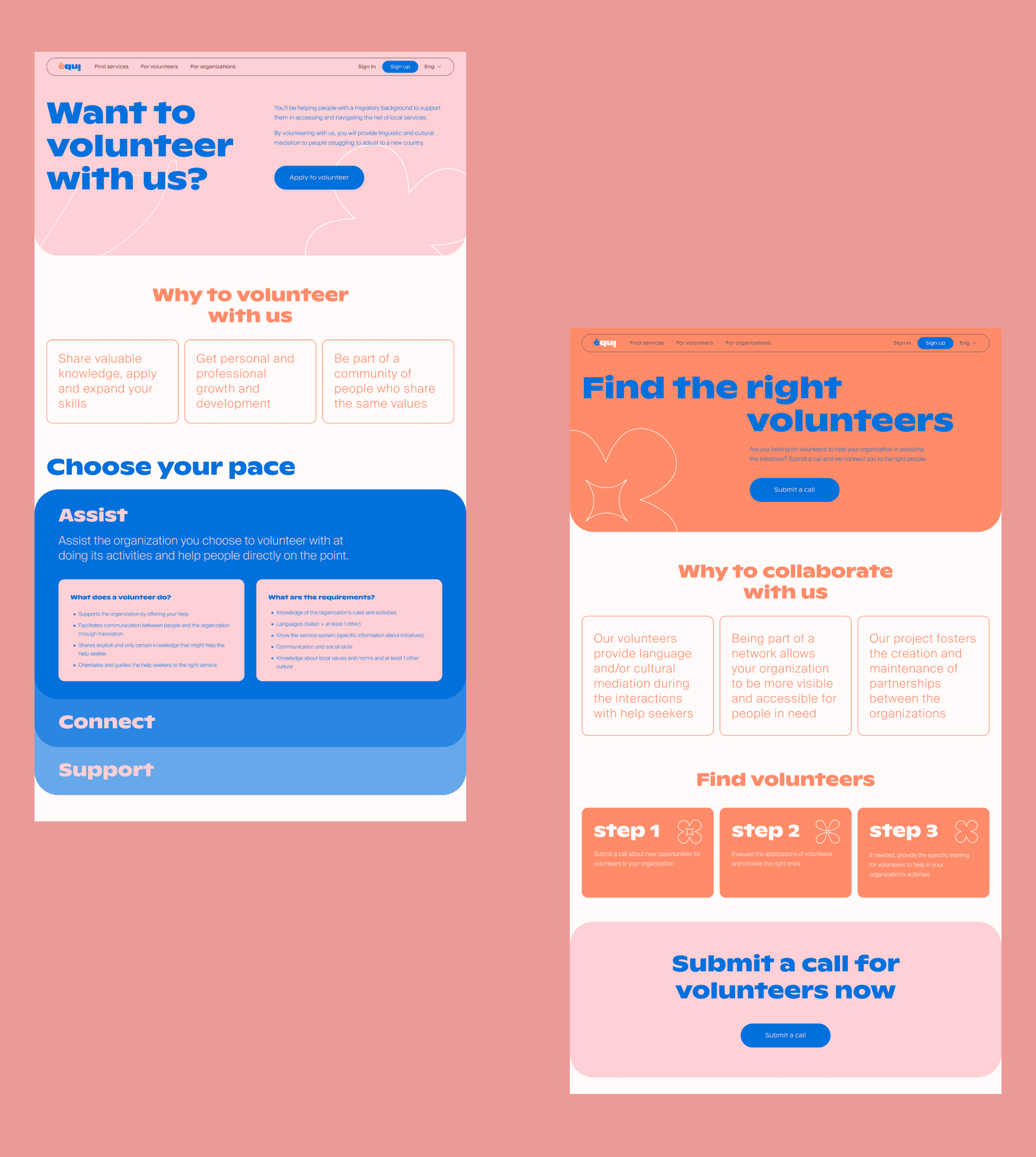
In addition, the èqui platform serves as a way to connect our main target groups – volunteers can be connected with a person in need or with an organisation where their skills are most useful. This dual function – resource map and volunteer connector – makes èqui useful to all three target groups from a single interface.
Our goal was to make the website useful and relevant to the needs of all groups, and to use clear, friendly, and easy-to-read content to help convey information and make the website more engaging and visually appealing.
> reflection
I'm grateful this project gave me and my team the opportunity to spend real time with associations, volunteers, and people from different backgrounds – as true collaborators. The conversations we had and the activities we participated in played a key role in shaping the service and deepening our understanding of real needs.
I strongly believe there is significant potential in this area for the implementation of our service, and our long-term goal is to make the network of services visible and accessible to everyone in need.
▼ other cases
Built with ❤︎ in Framer + Claude
02:16:47
9/10/2026
èqui
A service design project connecting people with a migratory background to local organisations and volunteers in Milan, helping them navigate and access the support they need.
2022
<contribution>
Service design, communication design, ux/ui
<tools>
Figma
> context
èqui is a network of organisations and volunteers aiming to provide support to people with a migratory background in accessing and navigating the services available in Municipio 2 in Milan. Our service aims to overcome language barriers and cultural differences, helping people better access and interact with local resources, and creating a more inclusive and equitable community.
èqui is a student project made by a team of 6 at Politecnico di Milano. I was mainly involved in the research, communication, and web design process.
> problem
People with a migratory background often face challenges when they move to a new country. Despite these challenges, they can bring valuable skills and experiences to their new communities – yet cultural differences and language barriers frequently prevent them from fully participating in society and accessing the support they need.
Cultural differences and language barriers make it difficult to fully participate in society
> research
The scope of our research was defined by two main streets in Municipio 2: Via Padova and Viale Monza. These streets represent a melting pot in the city of Milan, with similar yet very distinguished realities.
Throughout our field research, we interviewed local people and experts from associations. Conducting interviews with these individuals allowed us to gain valuable insights into how organizations train and manage volunteers, as well as the specific needs and challenges people face.
> co-design
We designed the co-design session to verify our primary hypothesis that people with a migratory background are missing a bridge between themselves and the broader society around them.
We worked directly with our target groups to uncover their main difficulties – the kinds of needs that don't always surface in formal interviews. What emerged shaped the foundations of our service concept and confirmed that the gap we had identified was real and widely felt.
> concept
èqui provides people with a migratory background and the associations that work for/with them with a unified network of all services available in the local area.
Through the interaction between trained volunteers and people seeking help, it also makes it possible to monitor the most frequent needs and requests, so that gaps can be identified and addressed by local associations and organisations.
Three groups are at the heart of the service: people seeking support, trained volunteers, and local organisations. èqui connects all three.
> identity & web design
Our brand identity is based on two fonts: Ginto Nord and Suisse Intl. The colour blue is a symbol of reliability, productivity, stability, while orange is generally considered a colour that expresses enthusiasm, harmony, and peace of the senses, all characteristics we want to convey to people through our service. Finally, the pale pink is used as an accent colour, mainly for details.
The website is structured around one core action: finding help. Users can quickly access an interactive map of local services filtered by need, and can also suggest new services to add – keeping the platform living and community-driven.
In addition, the èqui platform serves as a way to connect our main target groups – volunteers can be connected with a person in need or with an organisation where their skills are most useful. This dual function – resource map and volunteer connector – makes èqui useful to all three target groups from a single interface.
Our goal was to make the website useful and relevant to the needs of all groups, and to use clear, friendly, and easy-to-read content to help convey information and make the website more engaging and visually appealing.
> reflection
I'm grateful this project gave me and my team the opportunity to spend real time with associations, volunteers, and people from different backgrounds – as true collaborators. The conversations we had and the activities we participated in played a key role in shaping the service and deepening our understanding of real needs.
I strongly believe there is significant potential in this area for the implementation of our service, and our long-term goal is to make the network of services visible and accessible to everyone in need.
▼ other cases
Built with ❤︎ in Framer + Claude
02:16:47
9/10/2026
èqui
A service design project connecting people with a migratory background to local organisations and volunteers in Milan, helping them navigate and access the support they need.
2022
<contribution>
Service design, communication design, ux/ui
<tools>
Figma
> context
èqui is a network of organisations and volunteers aiming to provide support to people with a migratory background in accessing and navigating the services available in Municipio 2 in Milan. Our service aims to overcome language barriers and cultural differences, helping people better access and interact with local resources, and creating a more inclusive and equitable community.
èqui is a student project made by a team of 6 at Politecnico di Milano. I was mainly involved in the research, communication, and web design process.
> problem
People with a migratory background often face challenges when they move to a new country. Despite these challenges, they can bring valuable skills and experiences to their new communities – yet cultural differences and language barriers frequently prevent them from fully participating in society and accessing the support they need.
Cultural differences and language barriers make it difficult to fully participate in society
> research
The scope of our research was defined by two main streets in Municipio 2: Via Padova and Viale Monza. These streets represent a melting pot in the city of Milan, with similar yet very distinguished realities.
Throughout our field research, we interviewed local people and experts from associations. Conducting interviews with these individuals allowed us to gain valuable insights into how organizations train and manage volunteers, as well as the specific needs and challenges people face.
> co-design
We designed the co-design session to verify our primary hypothesis that people with a migratory background are missing a bridge between themselves and the broader society around them.
We worked directly with our target groups to uncover their main difficulties – the kinds of needs that don't always surface in formal interviews. What emerged shaped the foundations of our service concept and confirmed that the gap we had identified was real and widely felt.
> concept
èqui provides people with a migratory background and the associations that work for/with them with a unified network of all services available in the local area.
Through the interaction between trained volunteers and people seeking help, it also makes it possible to monitor the most frequent needs and requests, so that gaps can be identified and addressed by local associations and organisations.
Three groups are at the heart of the service: people seeking support, trained volunteers, and local organisations. èqui connects all three.
> identity & web design
Our brand identity is based on two fonts: Ginto Nord and Suisse Intl. The colour blue is a symbol of reliability, productivity, stability, while orange is generally considered a colour that expresses enthusiasm, harmony, and peace of the senses, all characteristics we want to convey to people through our service. Finally, the pale pink is used as an accent colour, mainly for details.
The website is structured around one core action: finding help. Users can quickly access an interactive map of local services filtered by need, and can also suggest new services to add – keeping the platform living and community-driven.
In addition, the èqui platform serves as a way to connect our main target groups – volunteers can be connected with a person in need or with an organisation where their skills are most useful. This dual function – resource map and volunteer connector – makes èqui useful to all three target groups from a single interface.
Our goal was to make the website useful and relevant to the needs of all groups, and to use clear, friendly, and easy-to-read content to help convey information and make the website more engaging and visually appealing.
> reflection
I'm grateful this project gave me and my team the opportunity to spend real time with associations, volunteers, and people from different backgrounds – as true collaborators. The conversations we had and the activities we participated in played a key role in shaping the service and deepening our understanding of real needs.
I strongly believe there is significant potential in this area for the implementation of our service, and our long-term goal is to make the network of services visible and accessible to everyone in need.
▼ other cases
Built with ❤︎ in Framer + Claude
02:16:47
9/10/2026
èqui
A service design project connecting people with a migratory background to local organisations and volunteers in Milan, helping them navigate and access the support they need.
2022
<contribution>
Service design, communication design, ux/ui
<tools>
Figma
> context
èqui is a network of organisations and volunteers aiming to provide support to people with a migratory background in accessing and navigating the services available in Municipio 2 in Milan. Our service aims to overcome language barriers and cultural differences, helping people better access and interact with local resources, and creating a more inclusive and equitable community.
èqui is a student project made by a team of 6 at Politecnico di Milano. I was mainly involved in the research, communication, and web design process.
> problem
People with a migratory background often face challenges when they move to a new country. Despite these challenges, they can bring valuable skills and experiences to their new communities – yet cultural differences and language barriers frequently prevent them from fully participating in society and accessing the support they need.
Cultural differences and language barriers make it difficult to fully participate in society
> research
The scope of our research was defined by two main streets in Municipio 2: Via Padova and Viale Monza. These streets represent a melting pot in the city of Milan, with similar yet very distinguished realities.
Throughout our field research, we interviewed local people and experts from associations. Conducting interviews with these individuals allowed us to gain valuable insights into how organizations train and manage volunteers, as well as the specific needs and challenges people face.
> co-design
We designed the co-design session to verify our primary hypothesis that people with a migratory background are missing a bridge between themselves and the broader society around them.
We worked directly with our target groups to uncover their main difficulties – the kinds of needs that don't always surface in formal interviews. What emerged shaped the foundations of our service concept and confirmed that the gap we had identified was real and widely felt.
> concept
èqui provides people with a migratory background and the associations that work for/with them with a unified network of all services available in the local area.
Through the interaction between trained volunteers and people seeking help, it also makes it possible to monitor the most frequent needs and requests, so that gaps can be identified and addressed by local associations and organisations.
Three groups are at the heart of the service: people seeking support, trained volunteers, and local organisations. èqui connects all three.
> identity & web design
Our brand identity is based on two fonts: Ginto Nord and Suisse Intl. The colour blue is a symbol of reliability, productivity, stability, while orange is generally considered a colour that expresses enthusiasm, harmony, and peace of the senses, all characteristics we want to convey to people through our service. Finally, the pale pink is used as an accent colour, mainly for details.
The website is structured around one core action: finding help. Users can quickly access an interactive map of local services filtered by need, and can also suggest new services to add – keeping the platform living and community-driven.
In addition, the èqui platform serves as a way to connect our main target groups – volunteers can be connected with a person in need or with an organisation where their skills are most useful. This dual function – resource map and volunteer connector – makes èqui useful to all three target groups from a single interface.
Our goal was to make the website useful and relevant to the needs of all groups, and to use clear, friendly, and easy-to-read content to help convey information and make the website more engaging and visually appealing.
> reflection
I'm grateful this project gave me and my team the opportunity to spend real time with associations, volunteers, and people from different backgrounds – as true collaborators. The conversations we had and the activities we participated in played a key role in shaping the service and deepening our understanding of real needs.
I strongly believe there is significant potential in this area for the implementation of our service, and our long-term goal is to make the network of services visible and accessible to everyone in need.
▼ other cases
Built with ❤︎ in Framer + Claude
02:16:47
9/10/2026